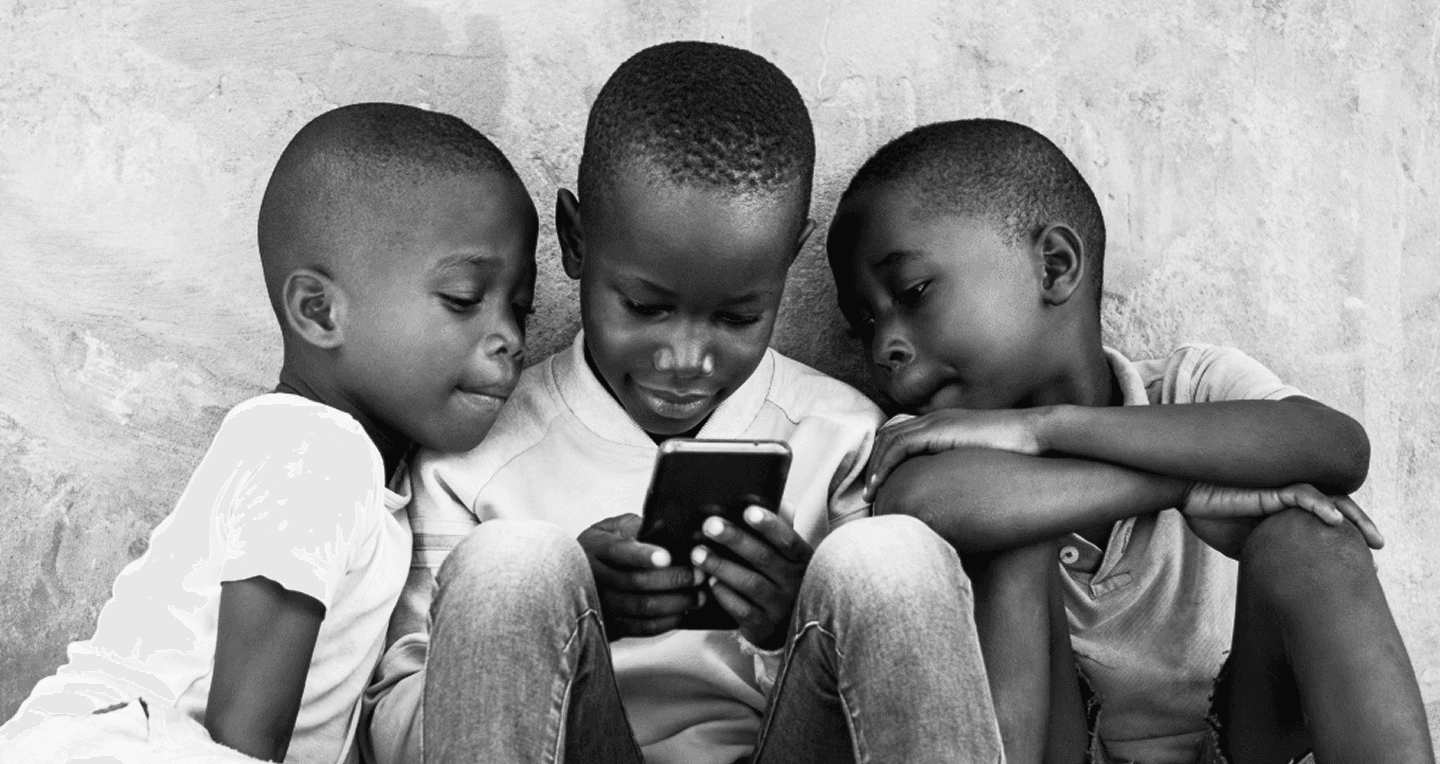

THE NIGERIAN BOY CHILD: A NATIONAL EMERGENCY HIDING IN PLAIN SIGHT
The Official Position of the Protect The Boy Child Initiative (PTBCI)
EXECUTIVE SUMMARY
Nigeria spends enormous energy asking what is wrong with its men - the violence, the silence, the absent fathers, the broken homes. Protect The Boy Child Initiative holds a simple position: these are not men's problems. They are boys' problems that were allowed to grow up.
The Nigerian boy child is falling out of school, out of guidance and out of sight, and no national policy, program or framework exists to catch him. PTBCI's position is that this constitutes a national emergency; that the response must be preventative rather than corrective; and that government, educators, families, media and the private sector each hold a specific, actionable share of the solution.
This paper sets out the evidence, the root causes as we see them, our core convictions, and our recommendations across four areas: national policy, mentorship, correctional reform, and community action.
THE EVIDENCE: A CRISIS WITHOUT A FILE
Nigeria holds the largest population of out-of-school children on earth - approximately 18.3 million, comprising 10.2 million of primary age and 8.1 million of junior secondary age (UNICEF, 2024). One in every five out-of-school children in the world is Nigerian. Fewer than half the children who begin Primary 1 persist to the end of junior secondary school (UNICEF/MICS, 2021). An estimated two million Almajiri children - overwhelmingly boys aged 4 to 12 - live far from their families without formal education (UNICEF Nigeria).
Globally, more boys than girls are out of school (UNESCO/UNICEF). Yet in Nigeria, the boy child appears in no dedicated national policy, no dedicated federal program, and no dedicated budget line.
The consequences are not hypothetical. The boy who exits the system at 12 does not vanish; he re-enters the national story years later - in crime statistics, in correctional centres, in cults and street networks that offer the belonging no one else did, in the epidemic of male silence around mental health, and in the next generation of absent or unprepared fathers.
Our position: what is uncounted goes unfixed. Nigeria's first failure toward its boys is statistical - we do not even measure the crisis properly. The second failure is structural - no institution owns the problem.
(A note on our own standards: PTBCI commits to citing verifiable data in all public materials, and to commissioning original research where national data does not exist. We hold ourselves to the evidentiary standard we demand of others.)
2. ROOT CAUSES: HOW A BOY GETS LOST
PTBCI identifies five compounding forces:
Poverty and premature responsibility: Boys are pulled from classrooms into workshops, farms, bus parks and trading - not out of malice, but survival. The title "man of the house," handed to children, converts boyhood into unpaid, unsupported adulthood.
The mentorship vacuum: Manhood is learned by observation. Where fathers are absent, overwhelmed or themselves unraised, boys apprentice under whoever is available - and the streets are always hiring.
The silence curriculum: Nigerian boys are trained out of emotional expression before age ten. "Boys don't cry" is not a saying; it is a syllabus. Its graduates fill our statistics on violence, addiction, and untreated mental illness.
A punitive reflex toward struggling boys: When a boy acts out, our systems reach for exclusion and punishment rather than inquiry. The "difficult" boy is expelled, detained or written off - treating symptoms while the cause compounds.
A cultural story with no room for the boy's pain: Because the boy child is presumed privileged, his suffering is presumed impossible. Advocacy, funding and programming have - rightly - built support structures for the girl child. Our position is not that this was wrong; it is that the same seriousness has never been extended to boys, and a nation cannot raise one half of its children and hope the other half raises itself.
3. OUR CORE CONVICTIONS
Prevention over correction: Reaching a boy at 10 costs a fraction - in money and in human terms - of rehabilitating a man at 30. Every naira spent on mentorship is subtracted from future budgets for prisons, policing and repair.
No boy is a lost cause: Not the boy in the correctional centre, not the dropout, not the "stubborn" one. A broken bottle is not rubbish; handled right, it is still glass - still capable of catching light. This conviction is why our correctional-centre program bears that name.
Boys are raised by presence, not programs: Policy matters, funding matters - but the operative unit of change is a consistent, trustworthy adult in a boy's corner. Every recommendation we make ultimately exists to put good adults within reach of boys.
This is not a competition with the girl child: Protecting boys does not subtract from protecting girls; the two are halves of one project. The men who will one day respect, marry, employ and govern alongside Nigeria's daughters are today's boys. Raising better men starts with protecting boys - and everyone, of every gender, benefits when we do.
Nothing about the boys without the boys: Boys are not props in their own rescue. PTBCI embeds boys' voices in its program design and holds that national policy should do the same.
4. WHAT MUST BE DONE: FOUR AREAS FOR ACTION
Area One - Put the boy child on the national agenda
Establish a national policy framework for boy-child welfare and development.
Commission and publish disaggregated national data on boy-child dropout, abuse, neglect and correctional outcomes.
Embed mentorship, emotional education and positive masculinity in the basic education curriculum.
Formally recognise International Day of the Boy Child (May 16) at federal and state level.
Area Two - Guarantee every at-risk boy a trusted adult
A structured mentorship offer for every boy at risk of dropping out.
School-based counselling staffed by professionals trained in how boys actually signal distress.
Trained, vetted community mentorship networks - coaches, faith leaders, artisans, elders.
Deliberate re-entry pathways for boys already outside the system, including Almajiri children and boy apprentices.
Area Three - Reform how the system treats "difficult" boys
Rehabilitation, education and mentorship inside every correctional and remand facility holding boys.
National minimum standards for care and education in boys' correctional institutions.
Community-based alternatives to detention for minor offences.
Published outcome tracking for every boy who passes through the system.
Area Four - Tackle the crisis beyond the school gates
Funded collaboration between schools, families, NGOs and community bodies to catch boys before they fall.
Practical support and guidance for parents - with specific provision for single mothers raising sons.
Media and entertainment partnerships that change the story Nigeria tells its boys about manhood.
A formal role for fathers and father-figures in school and community programming.

5. WHAT PTBCI COMMITS TO
We don't hand the government a to-do list and step back. Under the Year of The Man, PTBCI is building the proof of concept for every position in this paper:
Close The Gap - our documentary, opening the national conversation on what Nigerian manhood is and what it costs.
Initiatives and Programs - mentorship and education for boys who need them.
One-on-One dialogue - placing boys' own voices at the centre of the conversation.
University Symposiums - campus conversations reaching young men at the threshold of manhood.
Building Safe Spaces - media programming and in-person wellness spaces where Nigerian men unlearn the silence curriculum, so the next generation of boys never has to learn it.
We commit to transparency in our reporting, to measuring what we do honestly, and to saying plainly what worked and what did not.
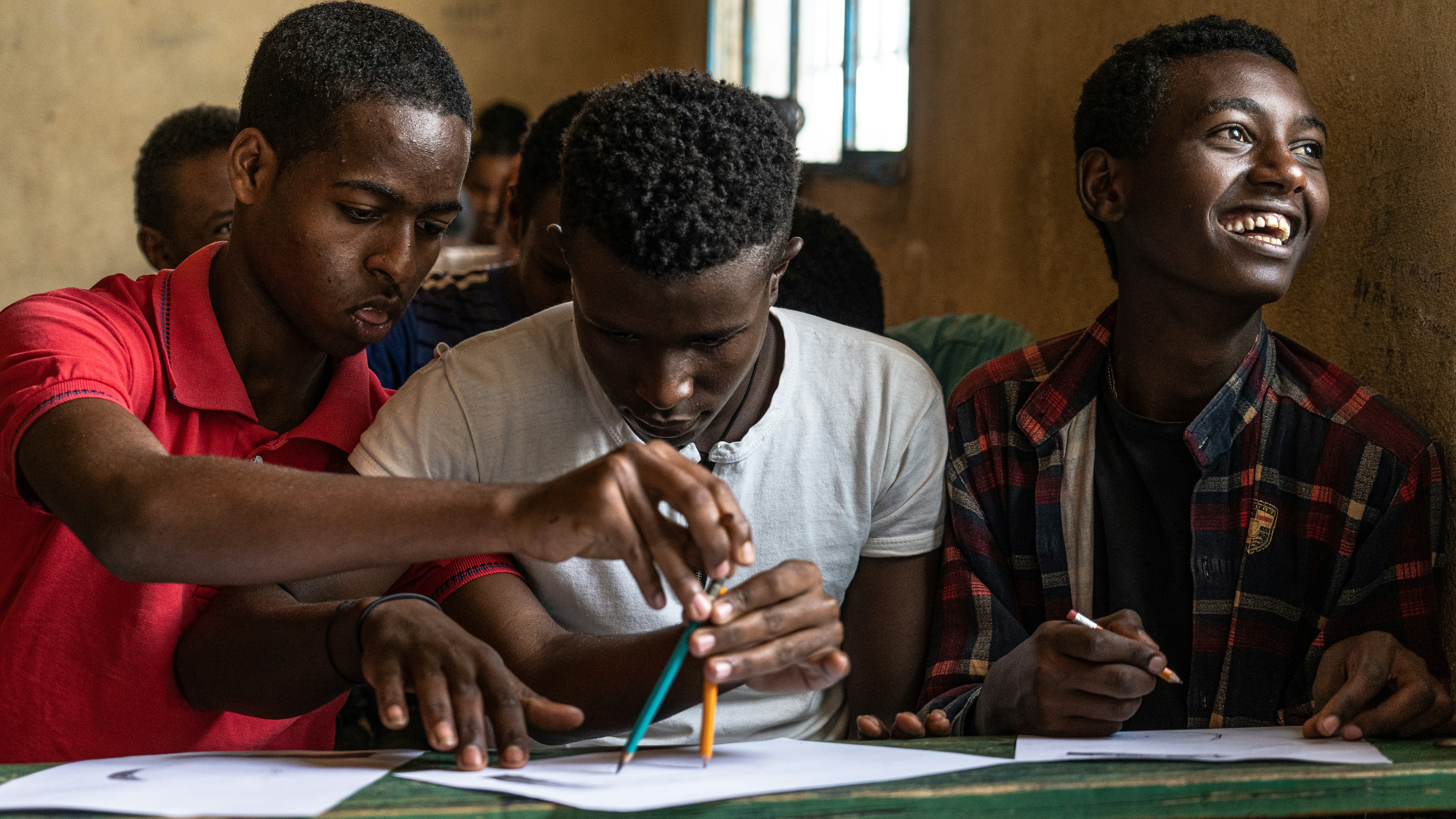
6. THE CALL
To government: give the boy child a policy, a program and a budget line. He currently has none.
To funders and the private sector: prevention is the highest-return investment in Nigeria's future workforce, families and security. Fund it like you believe that.
To educators and community leaders: the difficult boy in your classroom is a message, not a menace. Read him before you remove him.
To the media: the story you tell boys about manhood becomes the men they perform. Tell a better story.
To every Nigerian: look at the boys around you. One of them is drowning quietly. Be the adult in his corner.
The boys are our business. They should be yours too.
Protect The Boy Child Initiative (PTBCI) Mentor. Educate. Nurture.

Join Our Mission
Stay informed with partnership news, team updates, and stories from the young people driving change.