
What Does It Mean To Be A Man?
Nigeria cannot answer that question for its men until it answers a harder one first: what is happening to its boys?
We asked men on the streets of Lagos and nobody agreed on the answer. But the numbers agree on the problem - and the problem starts long before manhood.
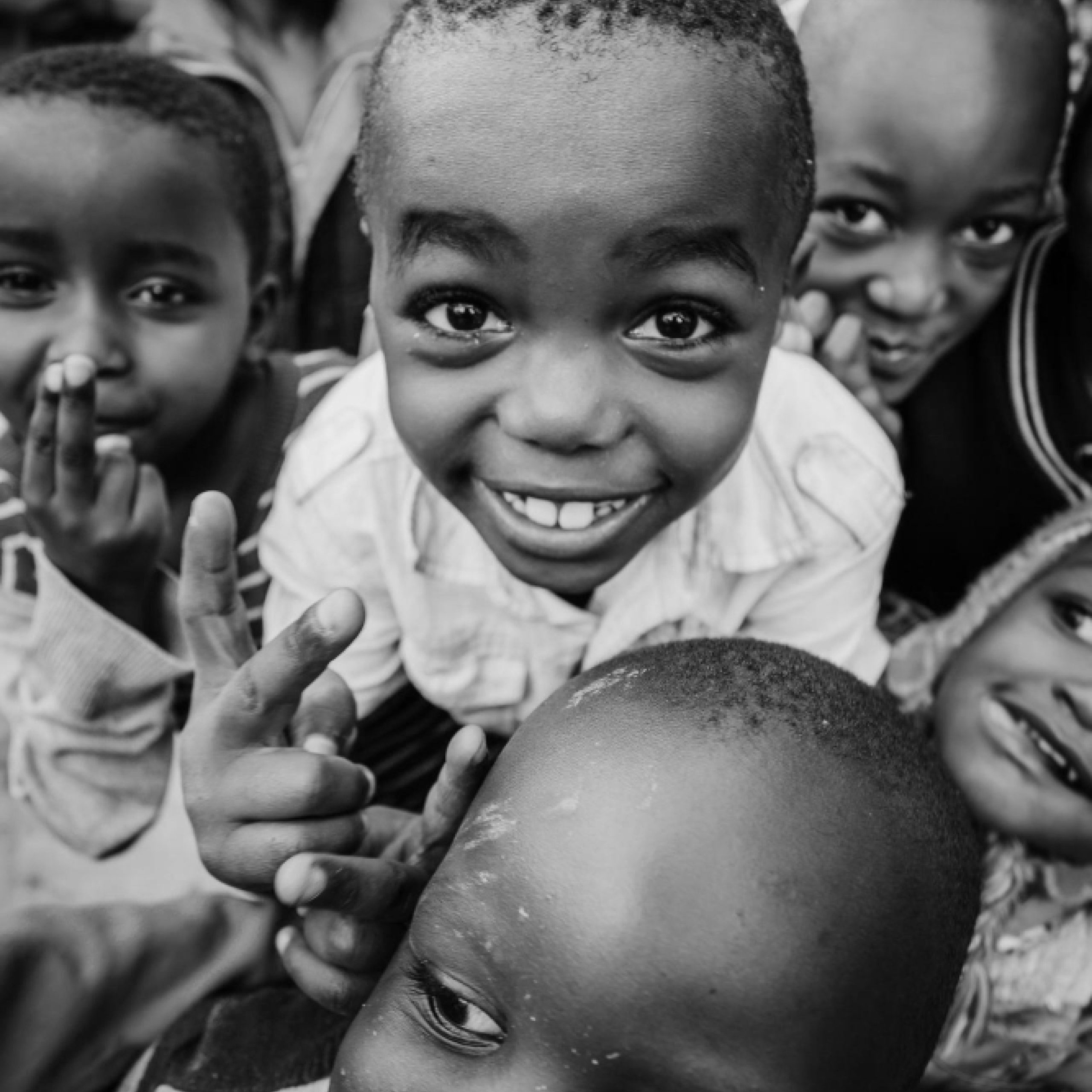
Boys falling out of school, out of guidance and out of sight is not a family issue - it is a national emergency that only treats its symptoms.
A boy who leaves school doesn't disappear. He reappears - in the correctional centre, in the crime statistics, in the cycle of absent fathers, in the man who never learned to speak his pain.
PTBCI believes the answer is prevention: reaching boys before the streets, silence or survival raise them instead. That means confronting root causes - poverty, absent mentorship, untreated trauma, and a culture that hands boys pressure instead of guidance - and it requires policymakers, educators, families, and communities acting together.
PTBCI
A system that protects the boy child. Let's build it together.
18.3 million
1 in 5
Less than 50%
of children who start Primary 1 make it to the end of junior secondary school
(UNICEF / MICS 2021)
-2 million
Almajiri children, mostly boys aged 4–12, sent far from home without formal education
(UNICEF Nigeria)
139 million vs 133 million
globally, more boys are out of school than girls - yet no national program in Nigeria is dedicated to the boy child (UNESCO/UNICEF global data)
1 in 4
boys aged 15–34 report loneliness, abuse or neglect before turning 18
PTBCI
WE MUST TAKE PREVENTATIVE ACTION NOW
To build a Nigeria that protects its boys, PTBCI urges action in four key areas:
Put the boy child on the national agenda
PTBCI's recommendations:
Establish a national policy framework for boy-child welfare and development — Nigeria has none
Commission and publish national data on boy-child dropout, abuse and neglect, so the crisis can no longer hide in averages
Embed mentorship, emotional education and positive masculinity into the basic education curriculum
Recognise International Day of the Boy Child (May 16) at federal and state level
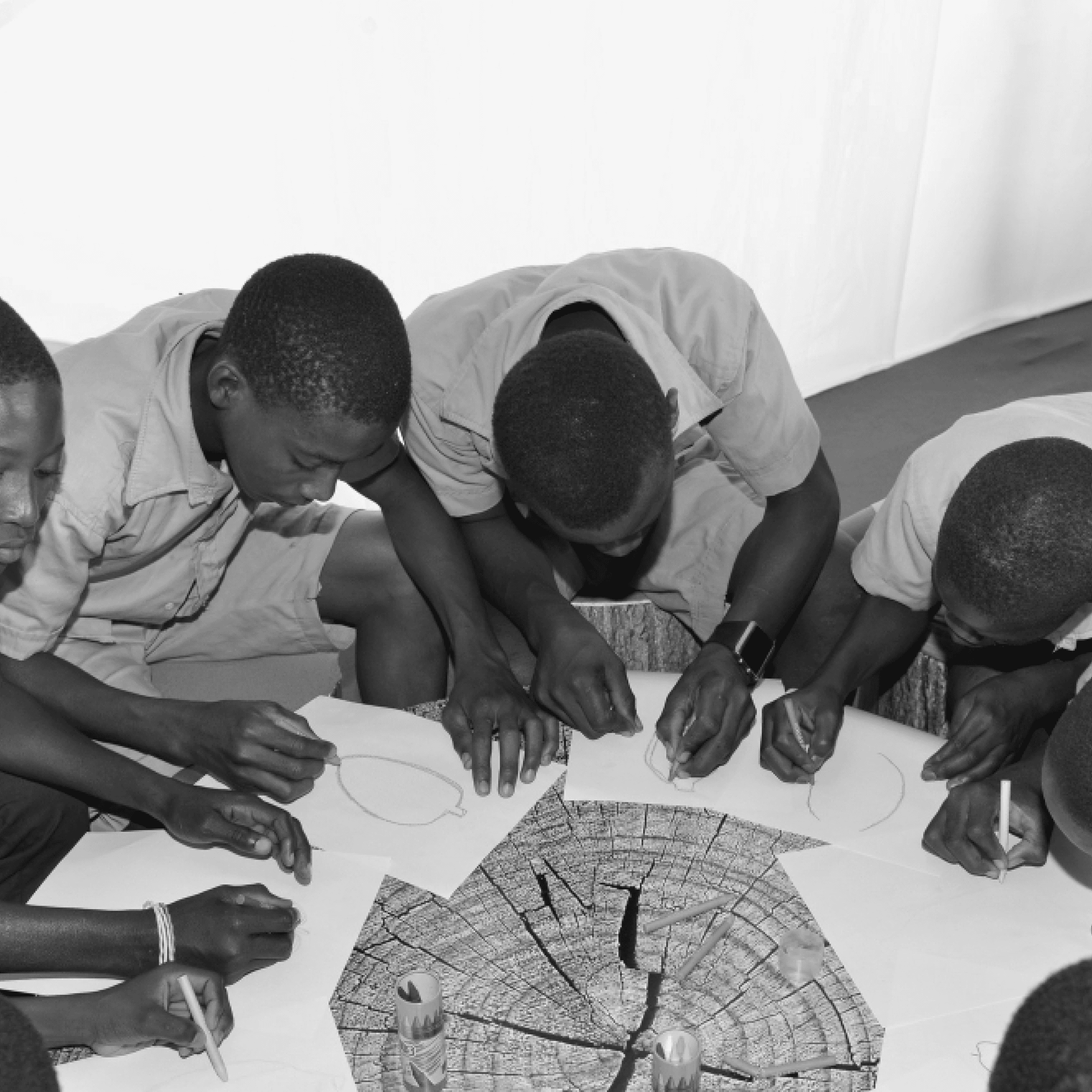
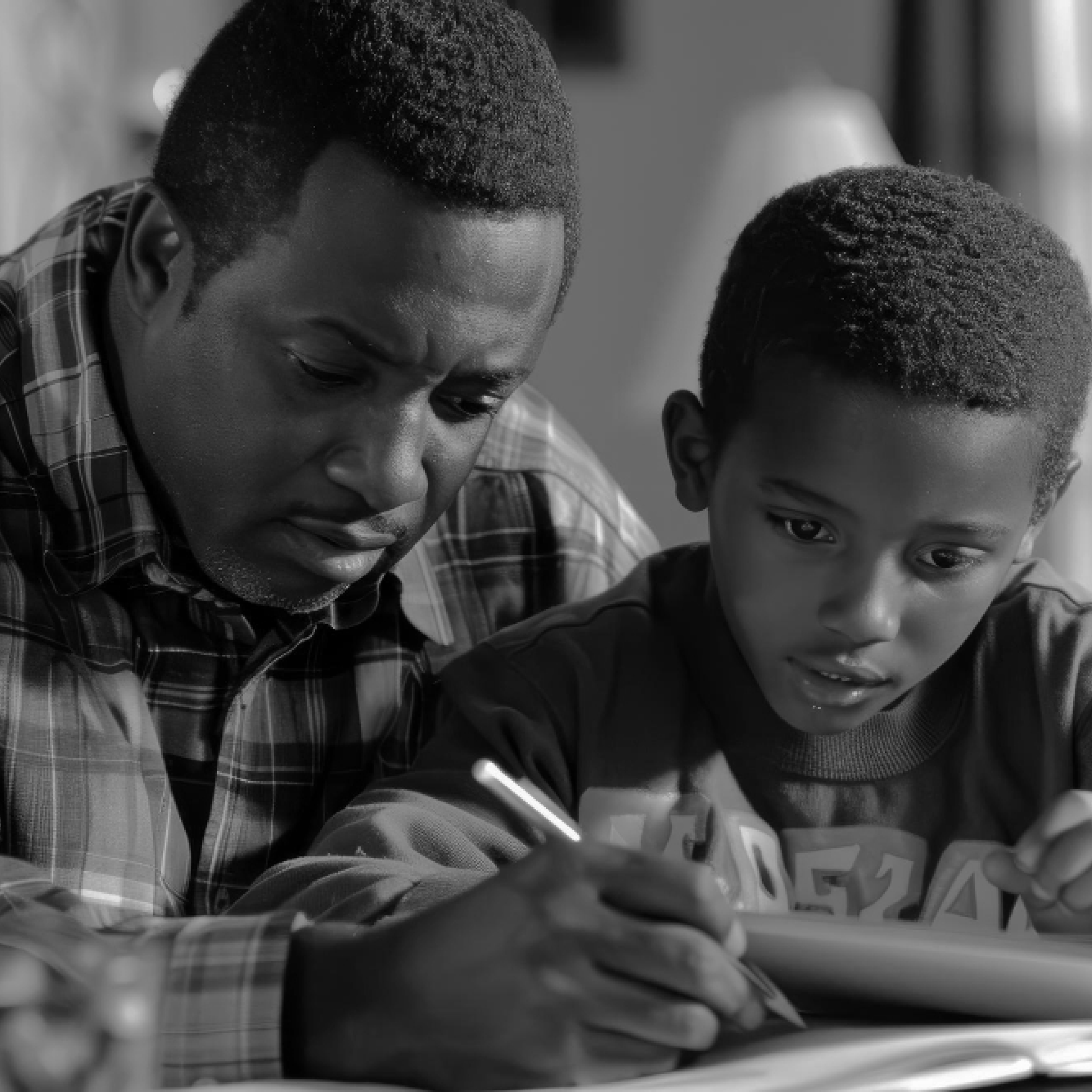
Guarantee every at-risk boy a trusted adult
PTBCI's recommendations:
Ensure every boy at risk of dropping out has access to a structured mentorship offer and a trusted adult relationship
Fund school-based counselling with staff trained in how boys actually communicate distress
Support community mentorship networks — coaches, faith leaders, tradesmen — with training and vetting frameworks
Prioritise re-entry pathways for boys already out of school, including Almajiri children and boy apprentices
Reform how the system handles "difficult" boys
PTBCI's recommendations:
Invest in rehabilitation, education and mentorship inside correctional and remand facilities for boys — punishment without restoration manufactures the next generation of broken men
Set national standards for the quality of care and education in boys' correctional centres
Create alternatives to detention for minor offences, anchored in community mentorship
Track and publish outcomes for boys who pass through the system

Tackle the crisis beyond the school gates
PTBCI's recommendations:
Fund collaboration between schools, families, NGOs and community organisations to catch boys before they fall out of the system
Equip parents — especially single mothers raising boys — with practical guidance and community support
Engage media and entertainment to change the story Nigeria tells its boys about what a man is
Give fathers and father-figures a formal place in school and community programming


The boys are our business. They should be yours too.
Every statistic above is a boy with a name. Prevention is cheaper than prison, mentorship is cheaper than rehabilitation, and a country that protects its boys raises the men it keeps praying for.

PTBCI
Stay Informed on our mission
Product
About Us
Work
Get Involved
Latest
Contact Us
PTBCI
LA-NG-registered company (13792350)
Social Media
X.com
YouTube
Privacy Policy
Terms of Service
Cookies Settings
© 2025 Protect The Boy Child Initiative. All rights reserved.